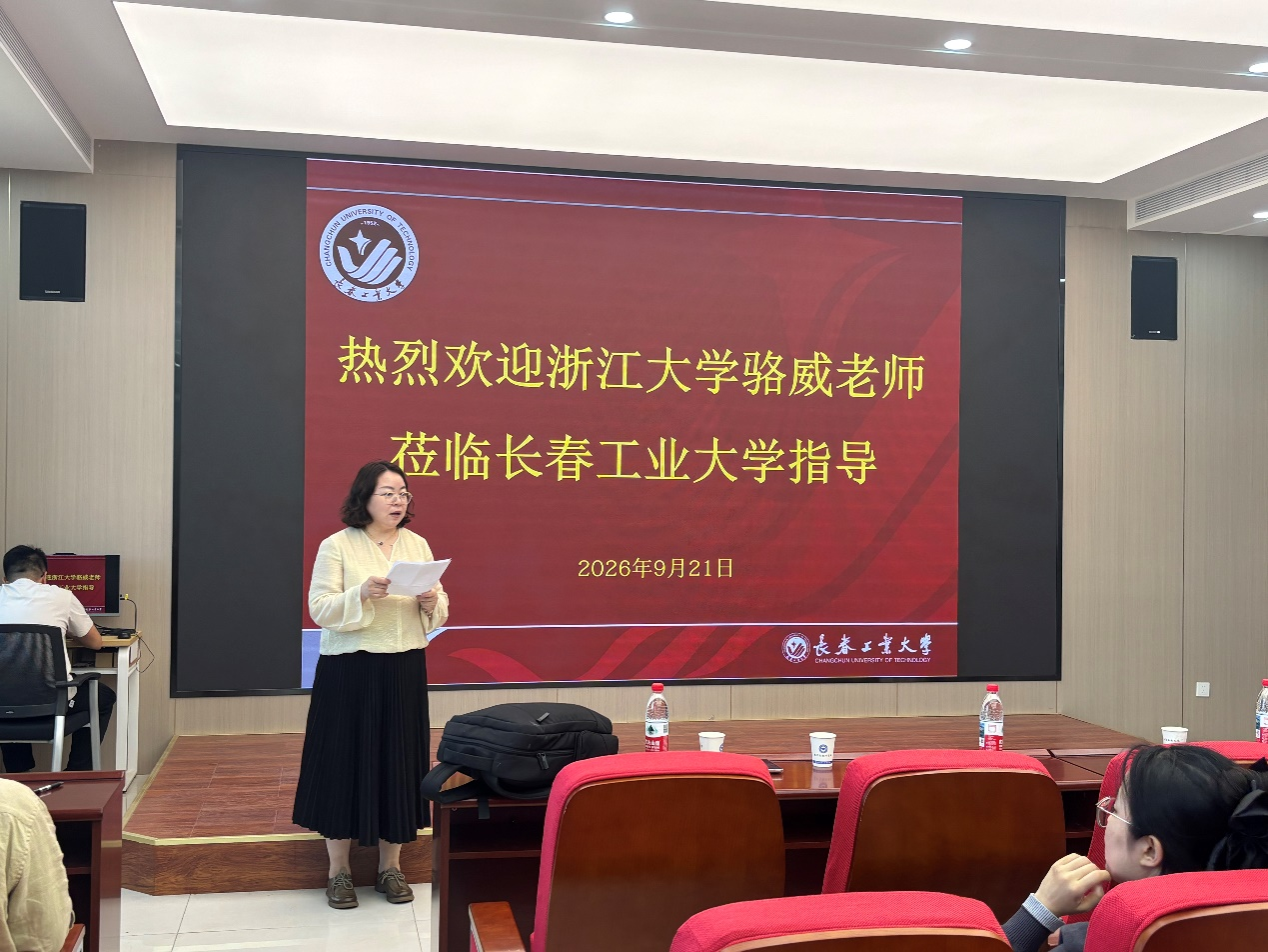
(通讯员:边睿骞)2026年9月21日下午14:00,我院特邀浙江大学、百人计划研究员骆威老师,在北湖东校区数统新楼201室作学术报告。本次报告由数学与统计学院和科学研究处承办,会议由数学与统计学院副院长李纯净教授主持,学院院长王纯杰教授、统计系支部书记袁晓惠教授、学院部分教师和研究生参加了本次学术报告会。
会议开始之际,由李老师作为代表对骆老师的到来表示感谢,并对骆老师及其研究内容做了简单的介绍。
报告人简介:骆威,浙江大学,百人计划研究员,于2014年毕业于美国宾夕法尼亚州立大学,之后任职于美国Baruch College,于2018年加入浙江大学,获得国家高层次人才称号。骆威的研究方向包括充分降维和因果推断,在Annals of Statistics, Biometrika, JRSSB, JMLR等统计和机器学习国际学术期刊上发表了多篇论文。
报告题目:Facilitating model-based clustering by dimension reduction
报告摘要:The Gaussian Mixture Model (GMM) has been widely used for clustering analysis. It is commonly fitted by the maximal likelihood approach, which is computationally challenging due to the non-convex minimization, especially as the dimensionality grows. To address this issue, we propose a two-step approach by recovering the intrinsic low-dimensional structure of GMM under additional constraints on its heterogeneity; that is, there exists a low-dimensional linear transformation of the data, given which the rest of the data are normally distributed and thus redundant for clustering. Our approach first recovers the desired low-dimensional data based on Stein's Lemma and then uses the reduced data only to fit GMM. Its computational efficiency comes from both the lower dimensionality and denoising of the data. Under a sparsity assumption of the clustering pattern, our approach can be generalized in high-dimensional settings. With the aid of a novelly constructed pseudo response, it can also be embedded into a general framework of sufficient dimension reduction, which encompasses a wider class of methods beyond Stein's Lemma to recover the low-dimensional structure of GMM. These findings are illustrated in the numerical studies at the end.
本次报告骆老师围绕“基于降维的模型聚类分析方法”作专题报告。首先,他介绍了什么是无监督降维和聚类分析。无监督降维与聚类分析是数据挖掘中处理无标签数据的两大核心技术。无监督降维旨在不依赖标签的情况下,将高维数据映射到低维空间,去除冗余、保留关键结构,便于可视化和后续计算。聚类分析则依据样本间的相似性,将数据划分为若干簇,使同簇样本尽可能相似、异簇差异明显。
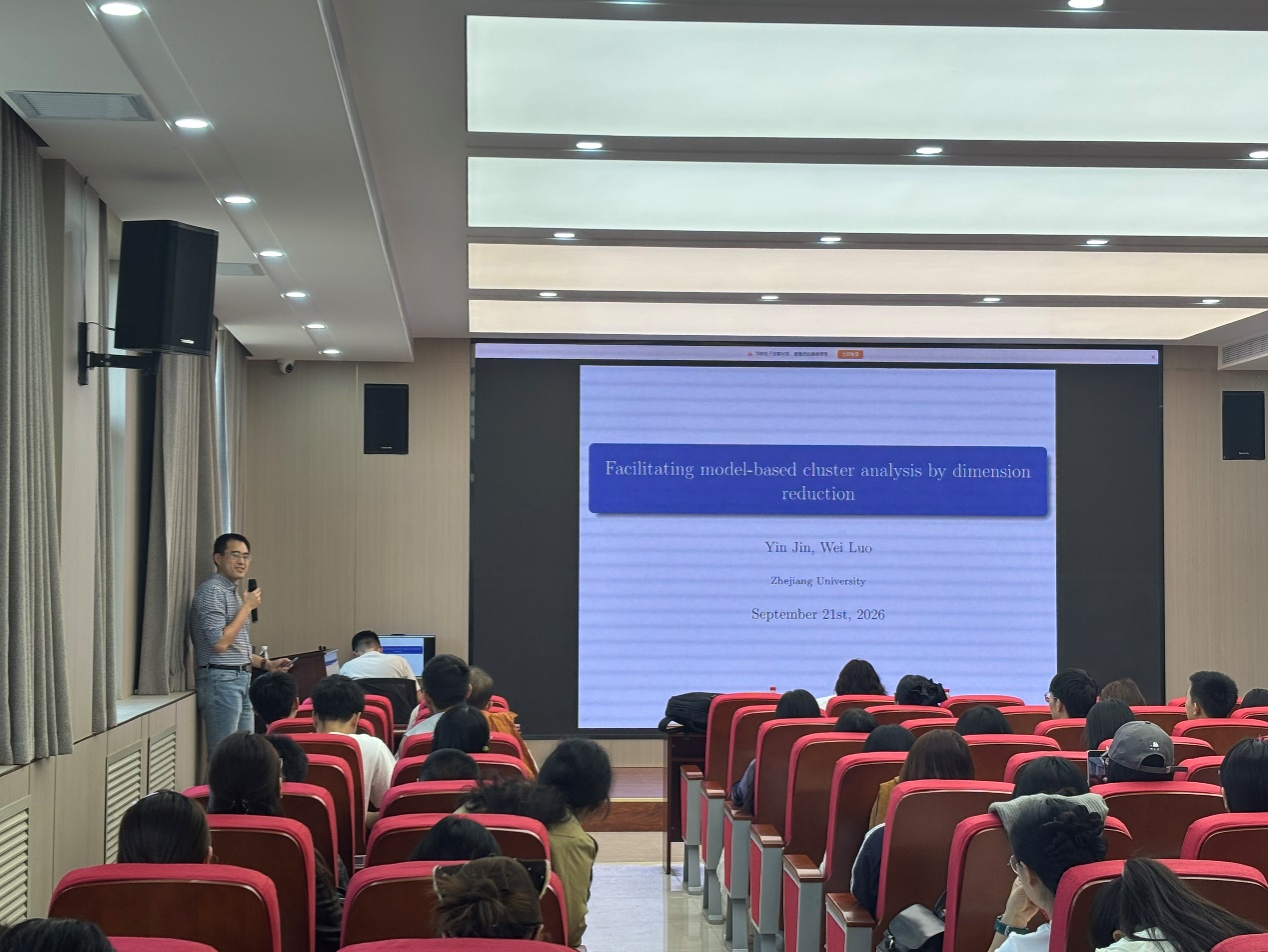
其次,他研究了如何利用降维提高基于高斯混合模型(GMM)的聚类效率与准确性。传统GMM通常采用EM算法估计,但随着数据维数增加,容易出现计算量快速增长、初始化敏感及不收敛等问题。
针对这一问题,他提出了一种面向聚类的无监督降维思想。首先识别并剔除与聚类无关的方向,再在低维数据上拟合GMM,从而降低参数估计难度和计算成本。在理论上,他定义了能够保留全部聚类信息的最小子空间(即中心信号空间),并讨论其低维结构及可识别性。在估计方面,利用Stein引理构造一系列属于中心信号空间的方向,并通过奇异值分解提取主要方向,从而避免直接估计各混合成分的均值和协方差。
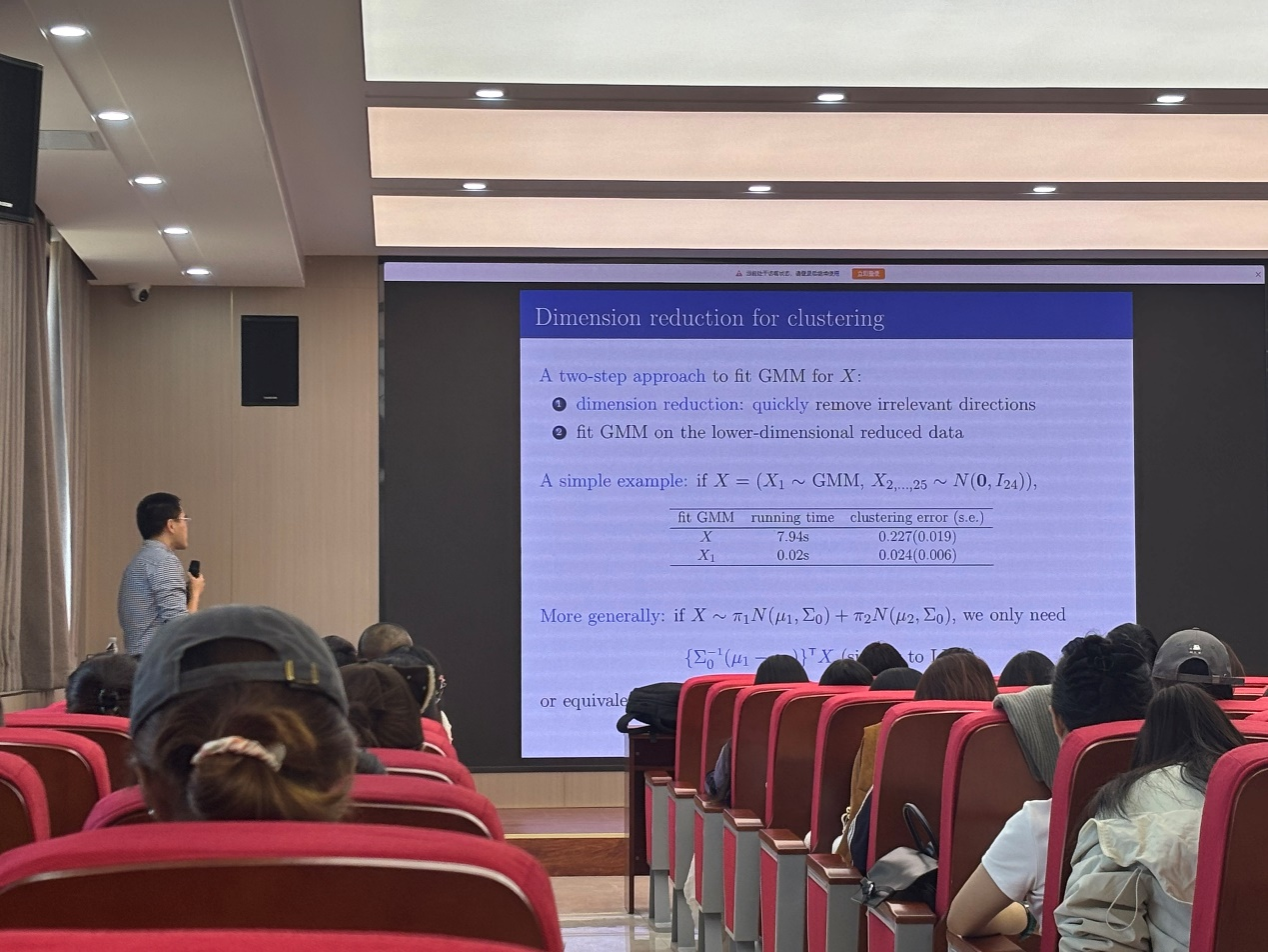
最后,数值结果表明,先降维再聚类能够明显减少计算时间,并在存在大量无关变量时改善聚类效果。图中的聚类误差由0.227降至0.024。总体而言,该研究为高维模型聚类提供了新的降维理论框架和较高效的估计方法。
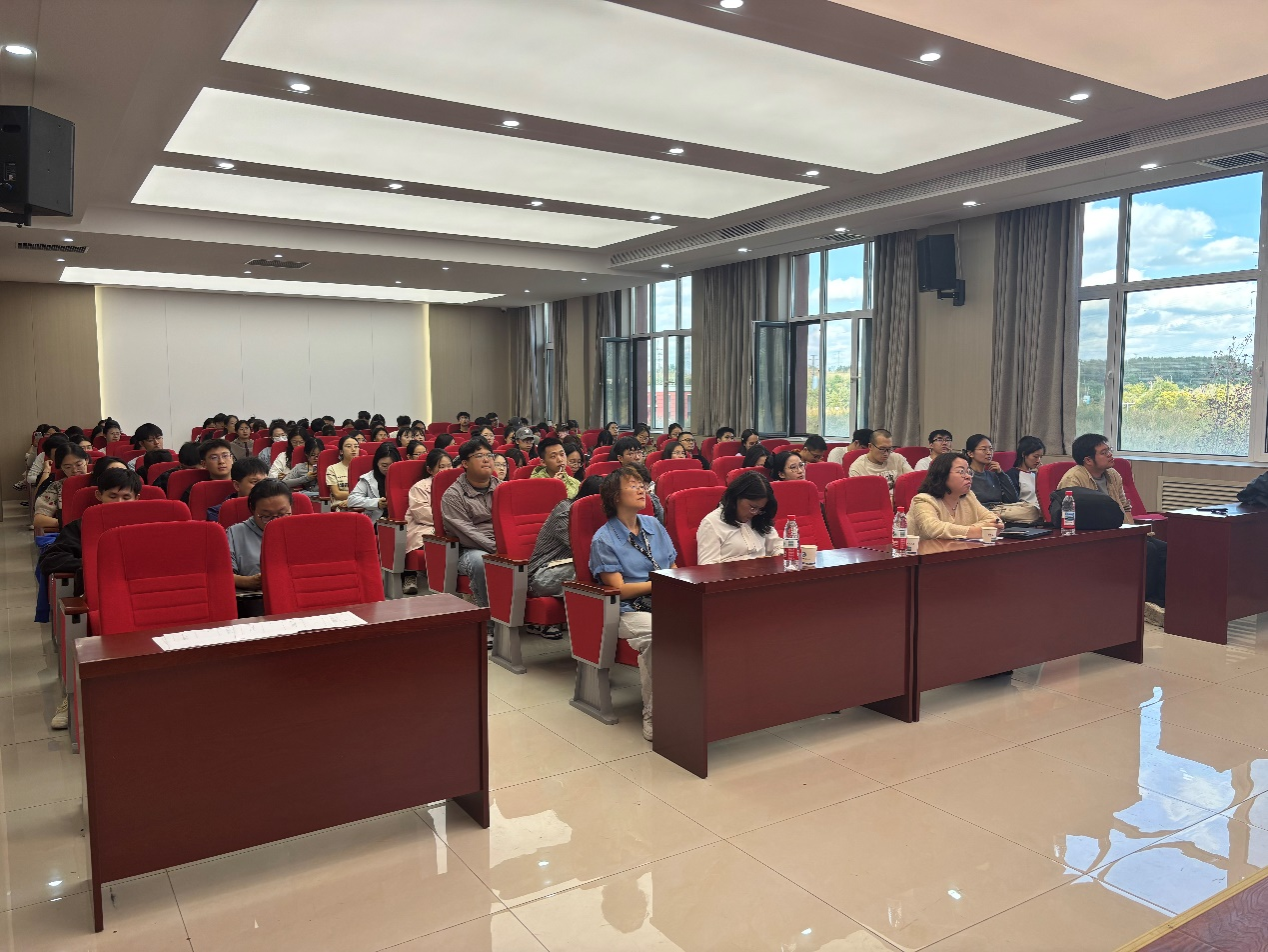
报告结束后,参会人员踊跃提问,就感兴趣的问题与骆老师进行了深入的讨论和交流。与在场师生深入交流的过程中,骆老师指出线性降维具有局限性,未来还需继续深入分析。聆听报告的师生均表示收获颇丰,并激发了大家的学习热情。
初审:关迪
复审:杨凯
终审:王丹、王纯杰
数学与统计学院
2026年9月22日

